01
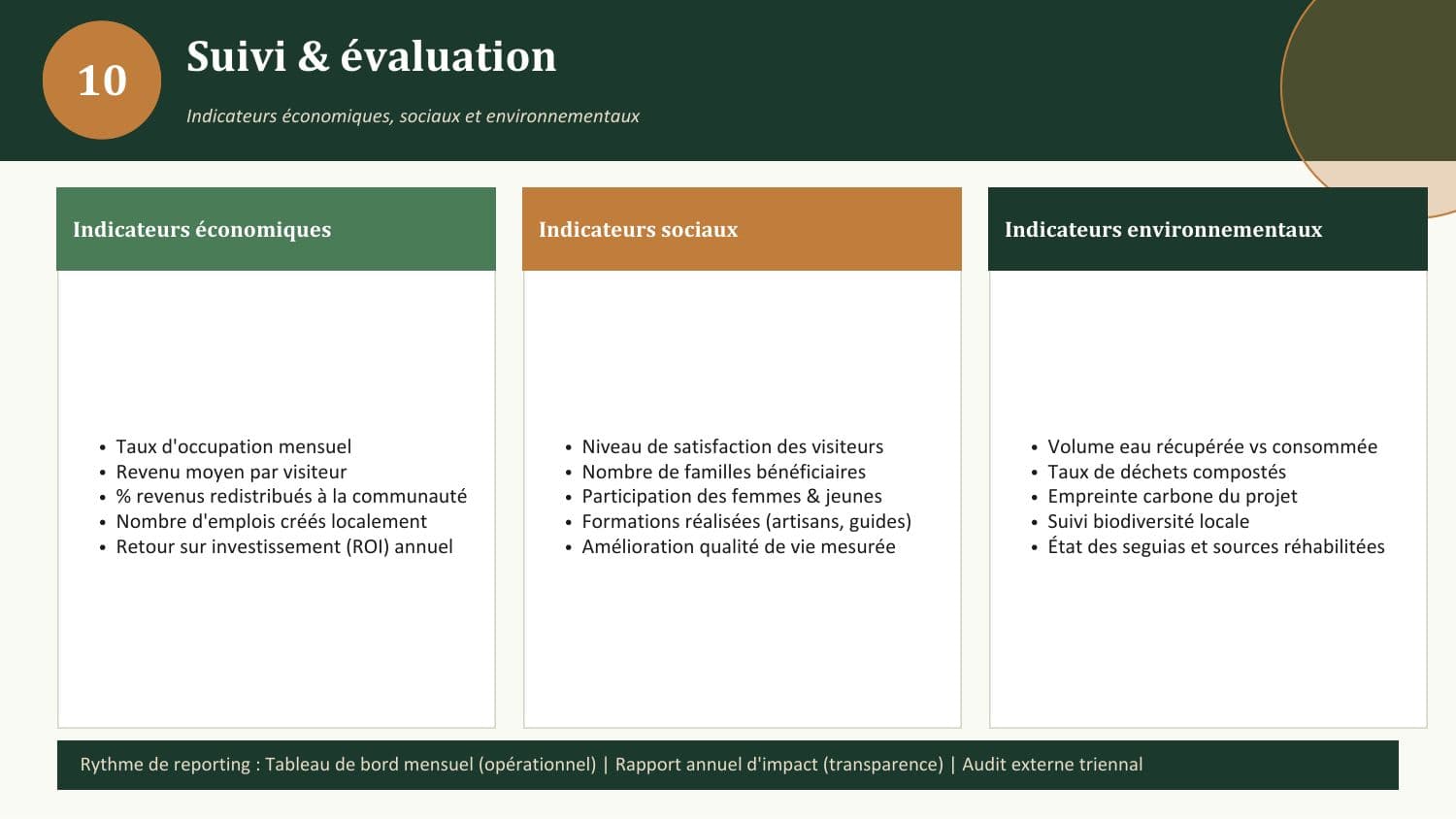
Economic indicators
Occupancy rate, average revenue per visitor, share of revenue redistributed, jobs created locally, and annual return on investment.
Live, learn, rebuild
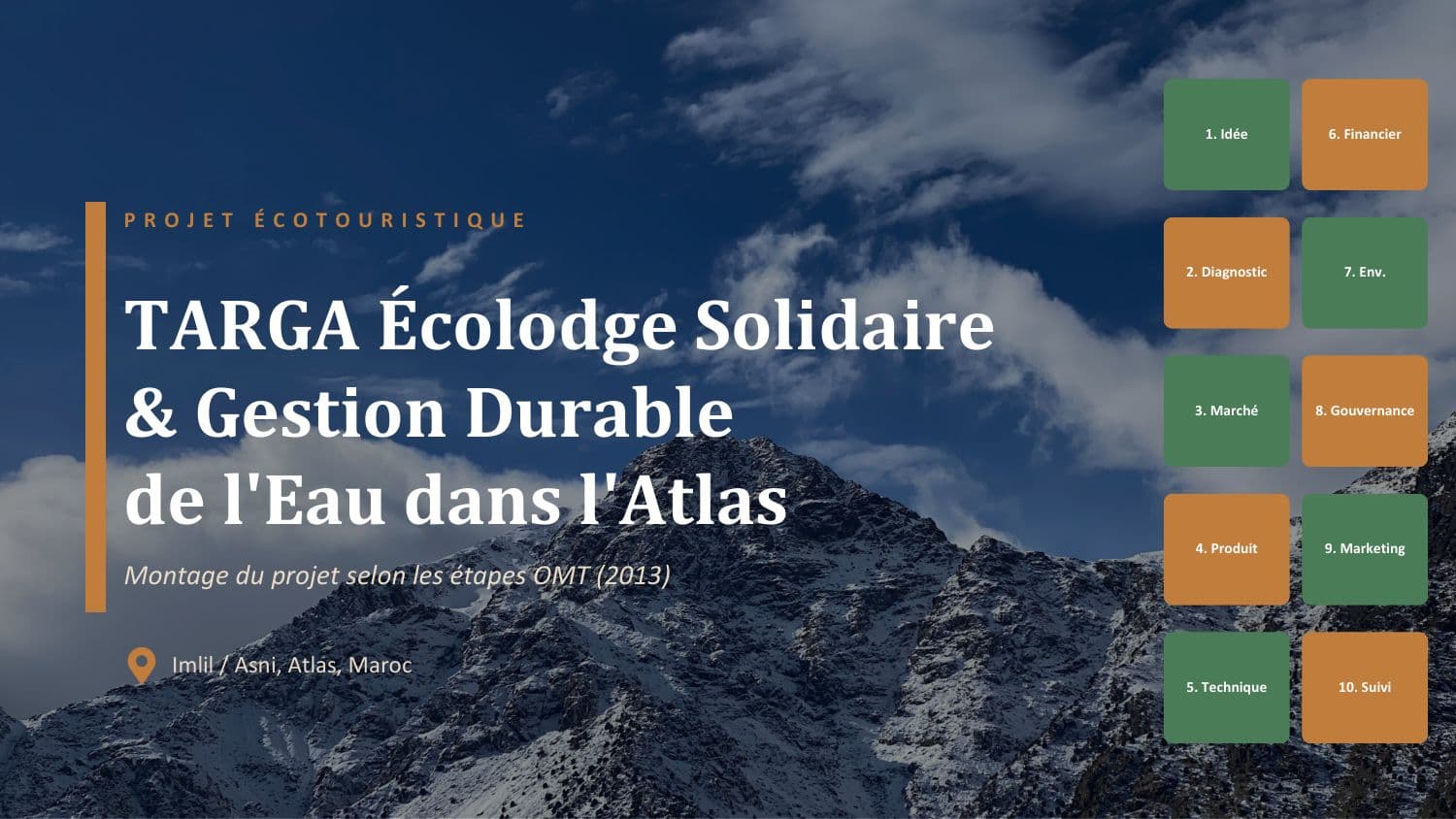
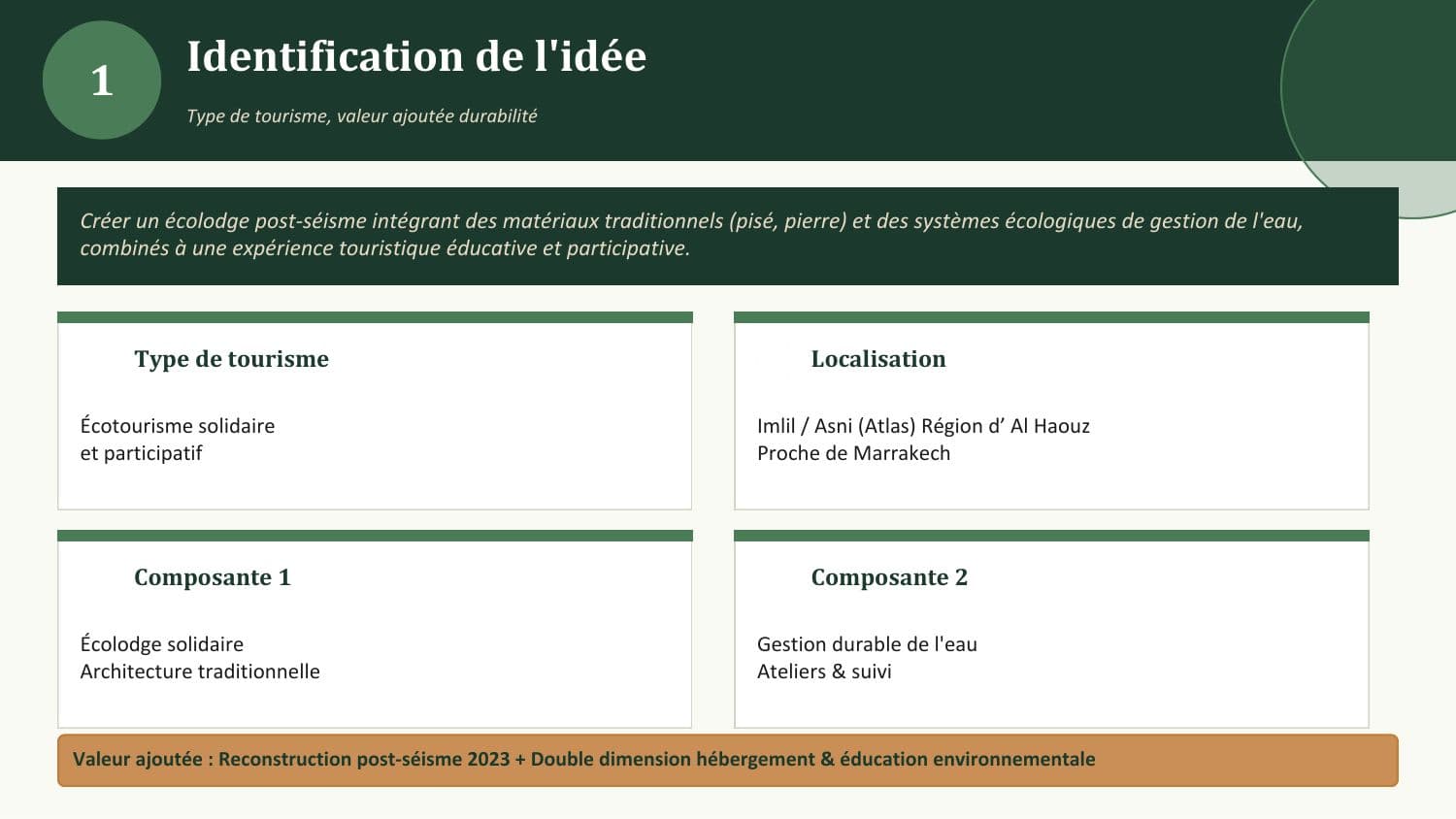
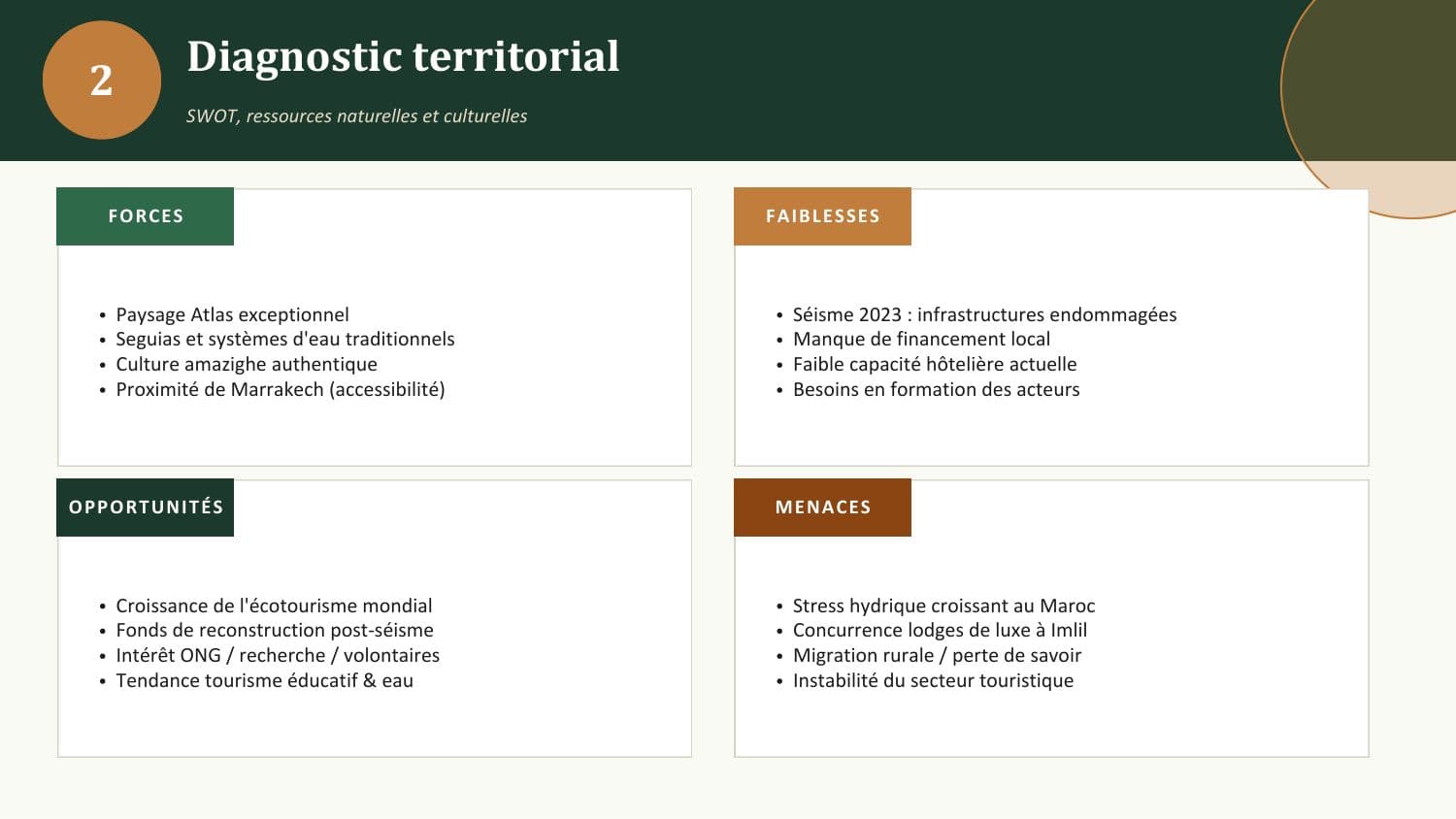
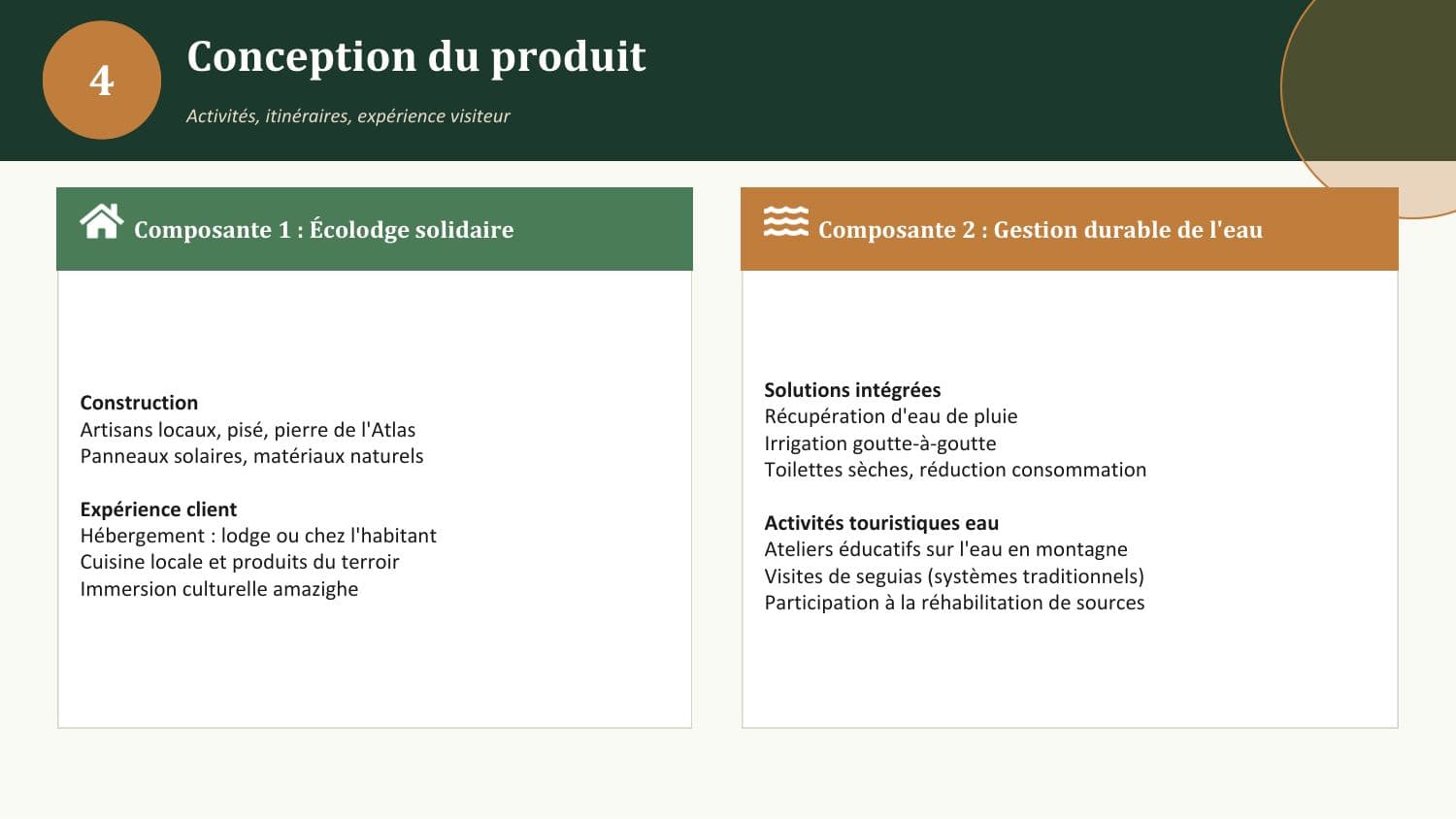
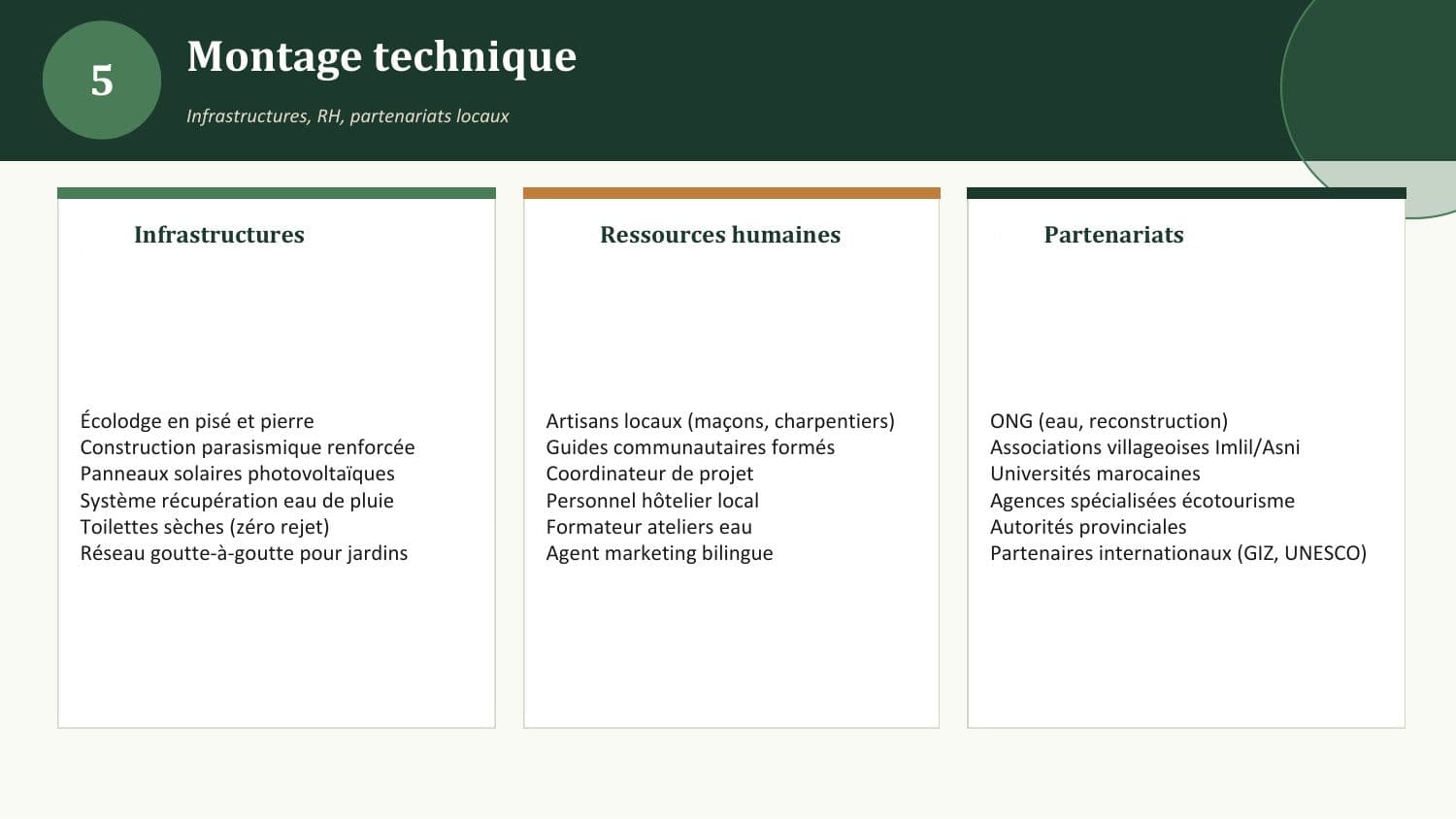
After the 2023 earthquake in the Al Haouz province, the question was not only how to rebuild, but how to rebuild in a way that leaves something behind. TARGA proposes a post-earthquake ecolodge built from traditional materials, rammed earth and Atlas stone, by local craftsmen.
The project has a second leg, just as important: sustainable water management. Rainwater harvesting, drip irrigation, dry toilets, and above all workshops where visitors learn how seguias work, the traditional channels that have irrigated these mountains for centuries.
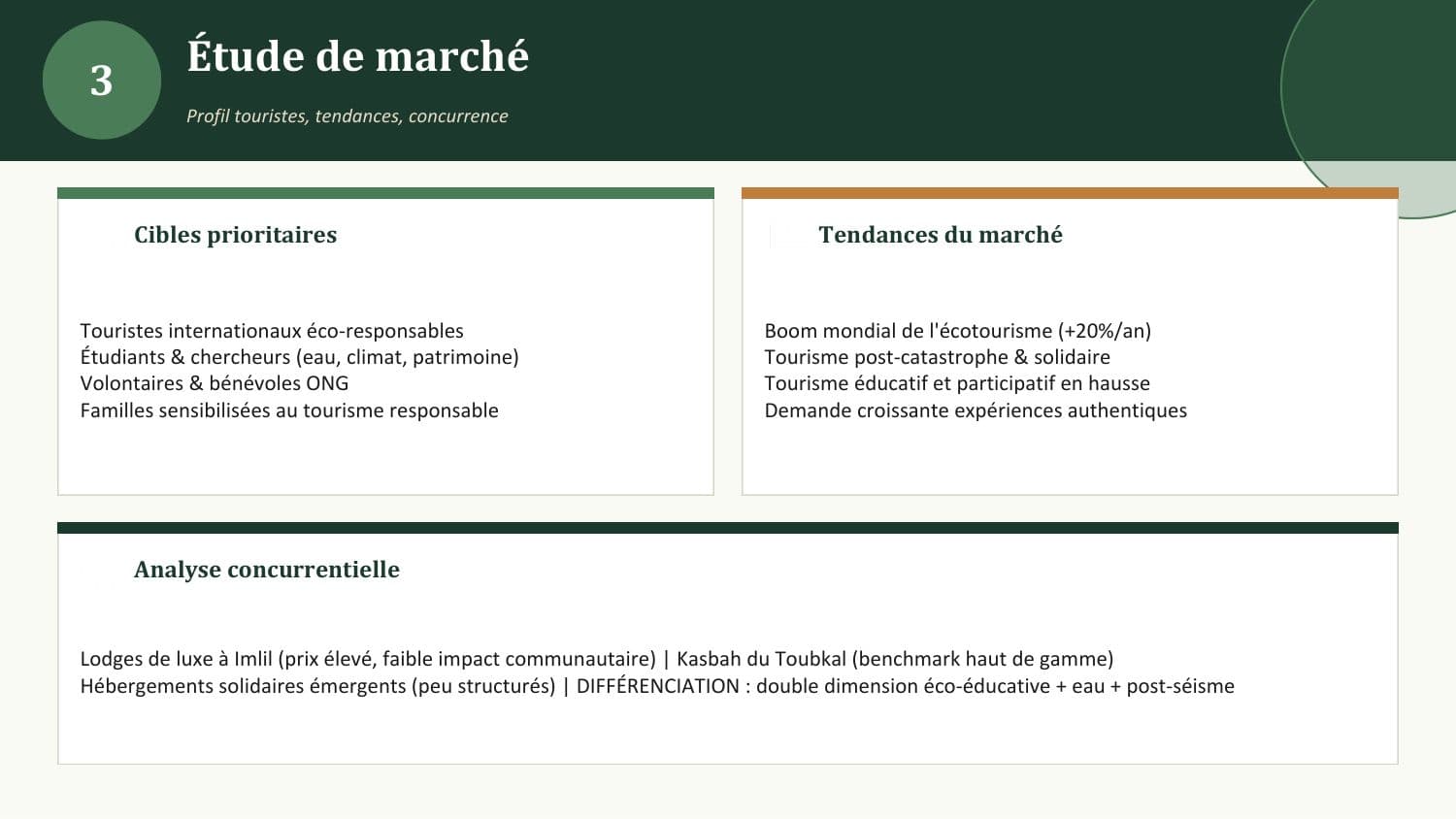
The plan follows the ten stages of the World Tourism Organization methodology: from identifying the idea to monitoring and evaluation, taking in territorial diagnosis, market study, technical and financial structuring, environmental assessment, and governance.
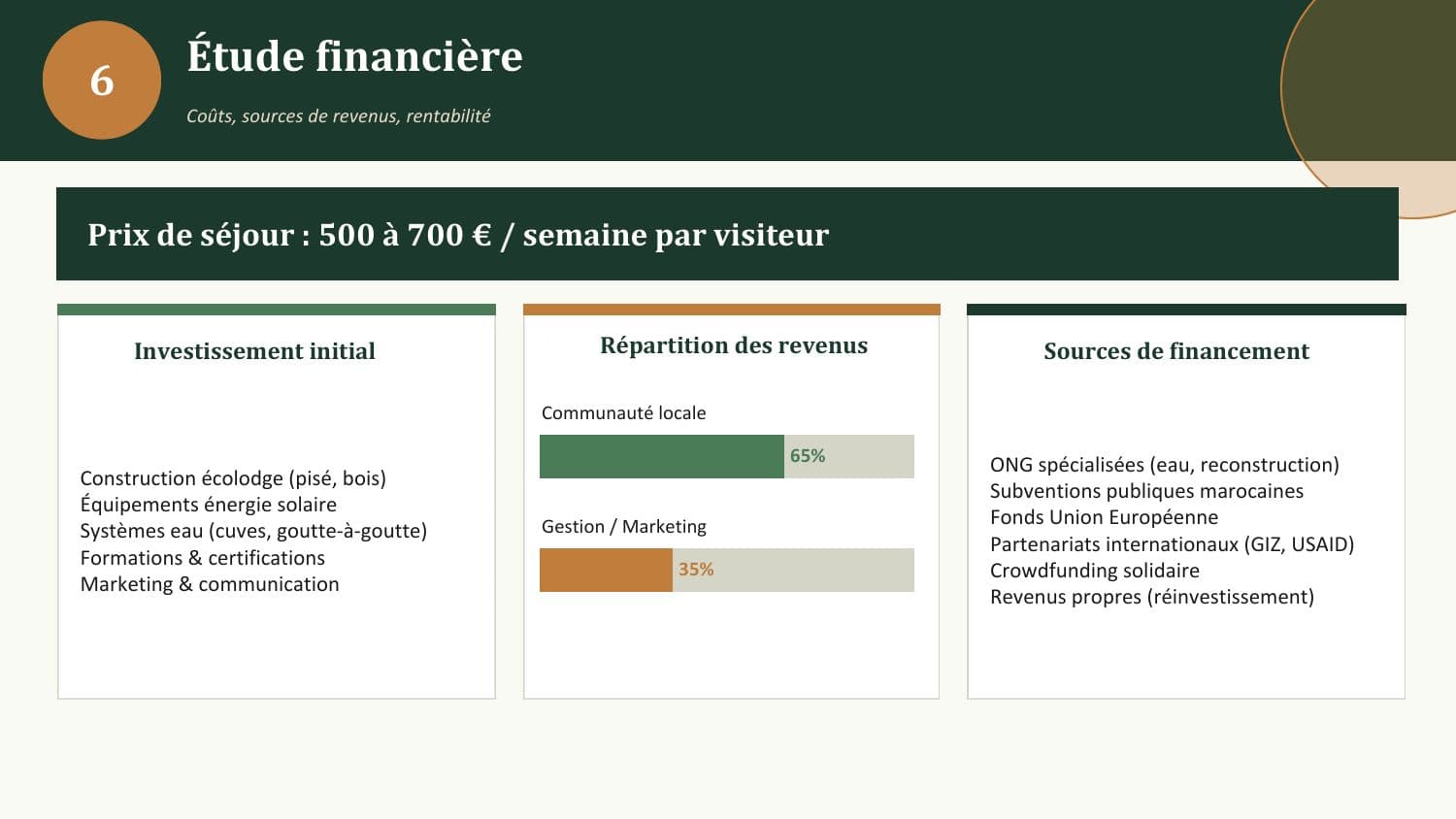
65%
of revenue returned to the local community
500-700 €
for a one-week stay per visitor
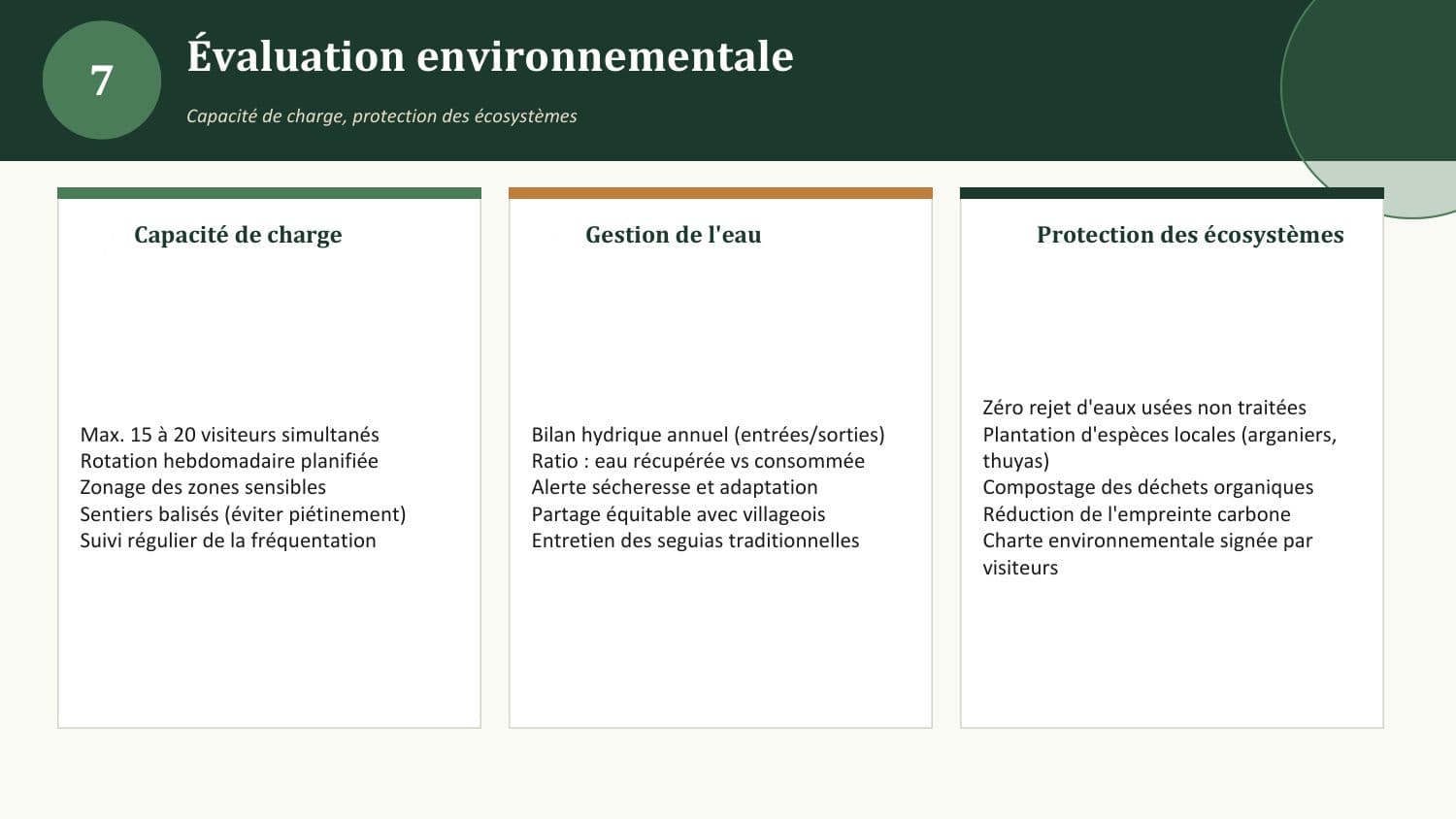
15-20
simultaneous visitors maximum
10
UNWTO project stages followed
Occupancy rate, average revenue per visitor, share of revenue redistributed, jobs created locally, and annual return on investment.
Visitor satisfaction, beneficiary families, participation of women and young people, and training delivered to craftsmen and guides.
Water harvested versus consumed, share of waste composted, carbon footprint, biodiversity, and condition of rehabilitated seguias.
Reporting rhythm: a monthly operational dashboard, an annual impact report for transparency, and an external audit every three years.
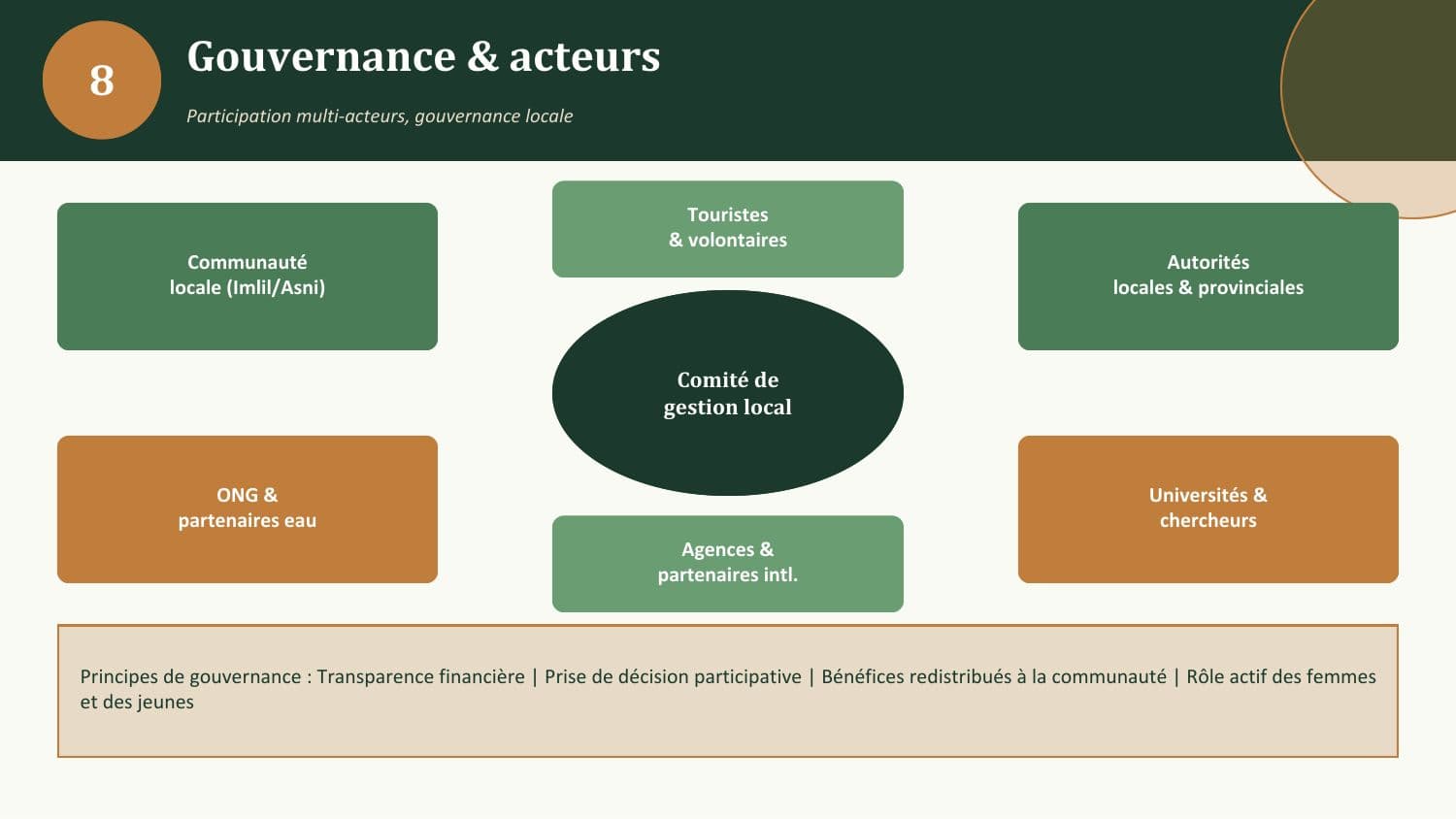
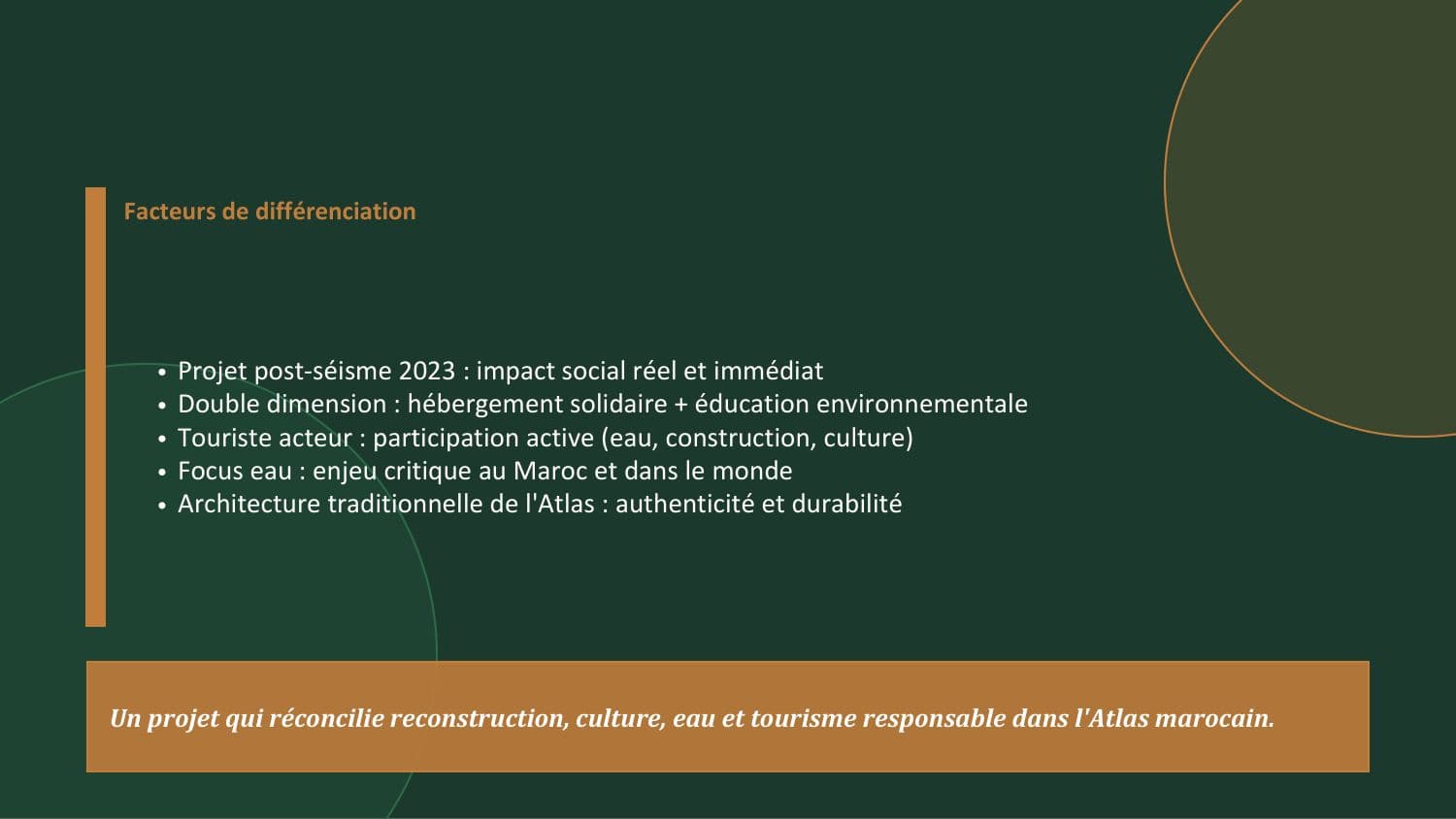
A post-earthquake project whose benefit to families in Imlil and Asni is direct and measurable.
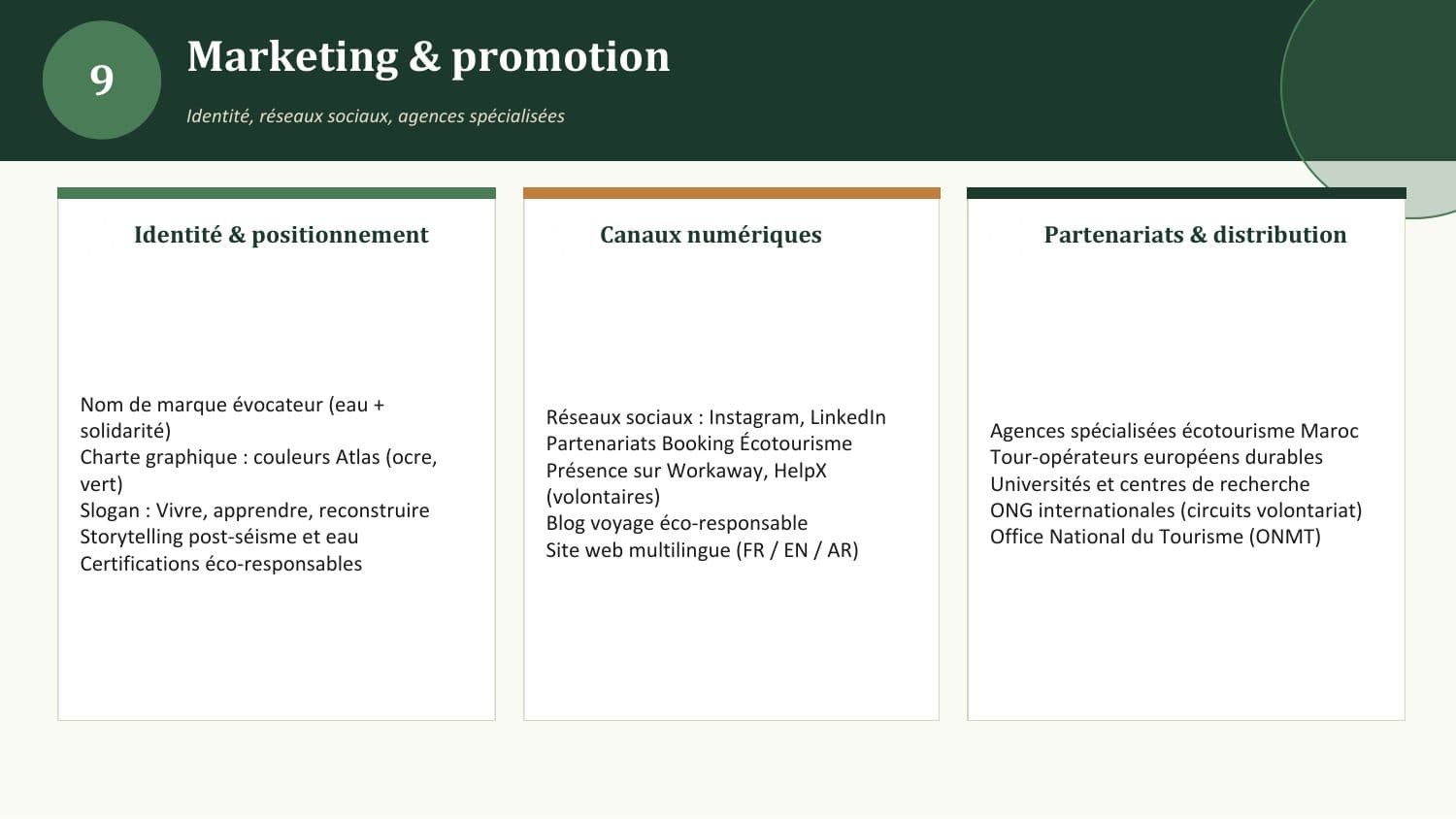
Solidarity accommodation and environmental education inside one experience.
Active participation in water works, construction, and the cultural life of the village.
A critical issue in Morocco and beyond, addressed head-on rather than used as a marketing line.
Walk through the deck, slide by slide.