01
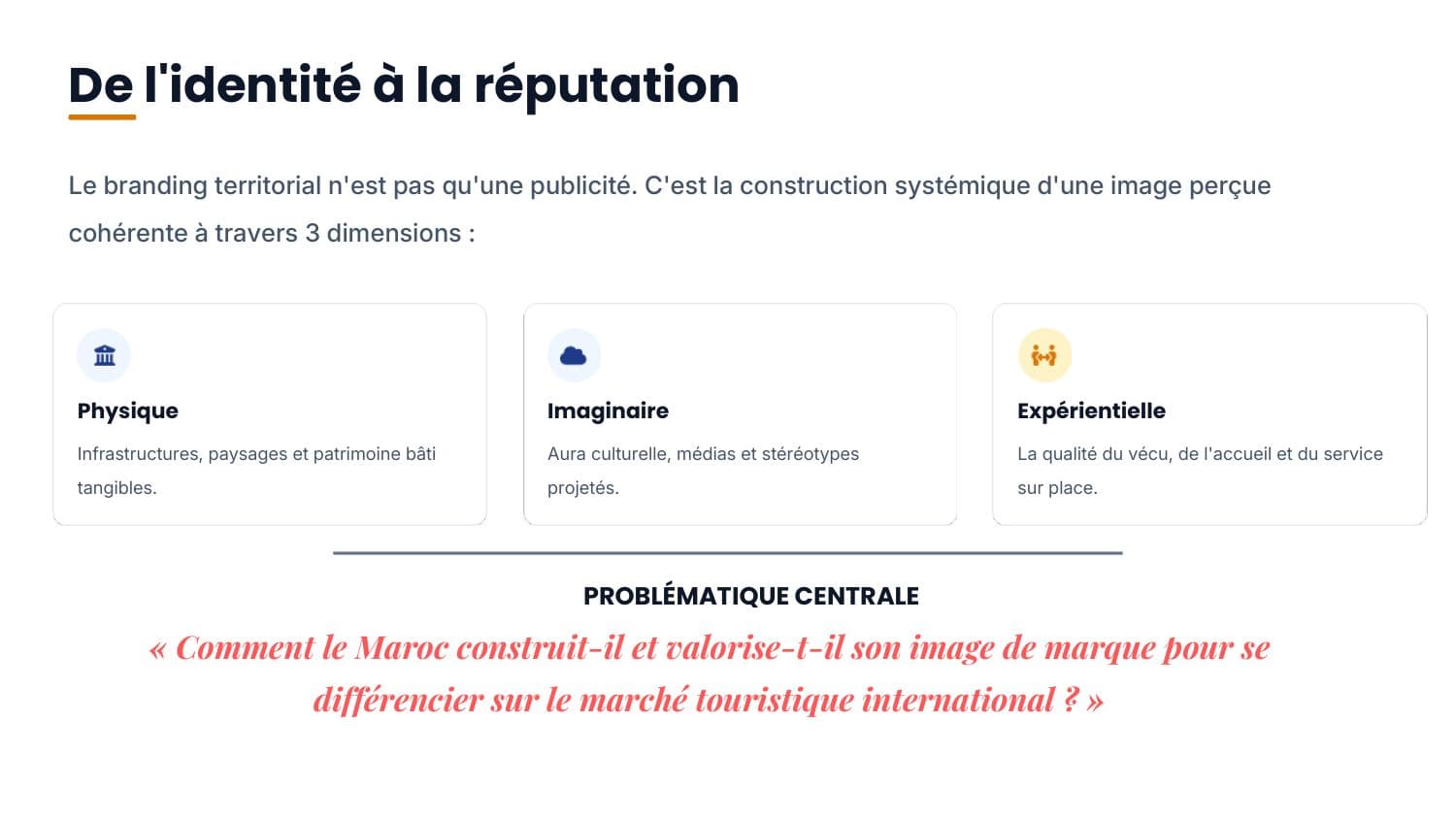
Physical
Infrastructure, landscapes, and tangible built heritage.
Building a destination's image against international competition
Territorial branding is not advertising. It is the construction of a coherent perceived image across three dimensions: the physical, with infrastructure and built heritage; the imaginary, with cultural aura and projected stereotypes; and the experiential, with the actual quality of what is lived and how guests are received.
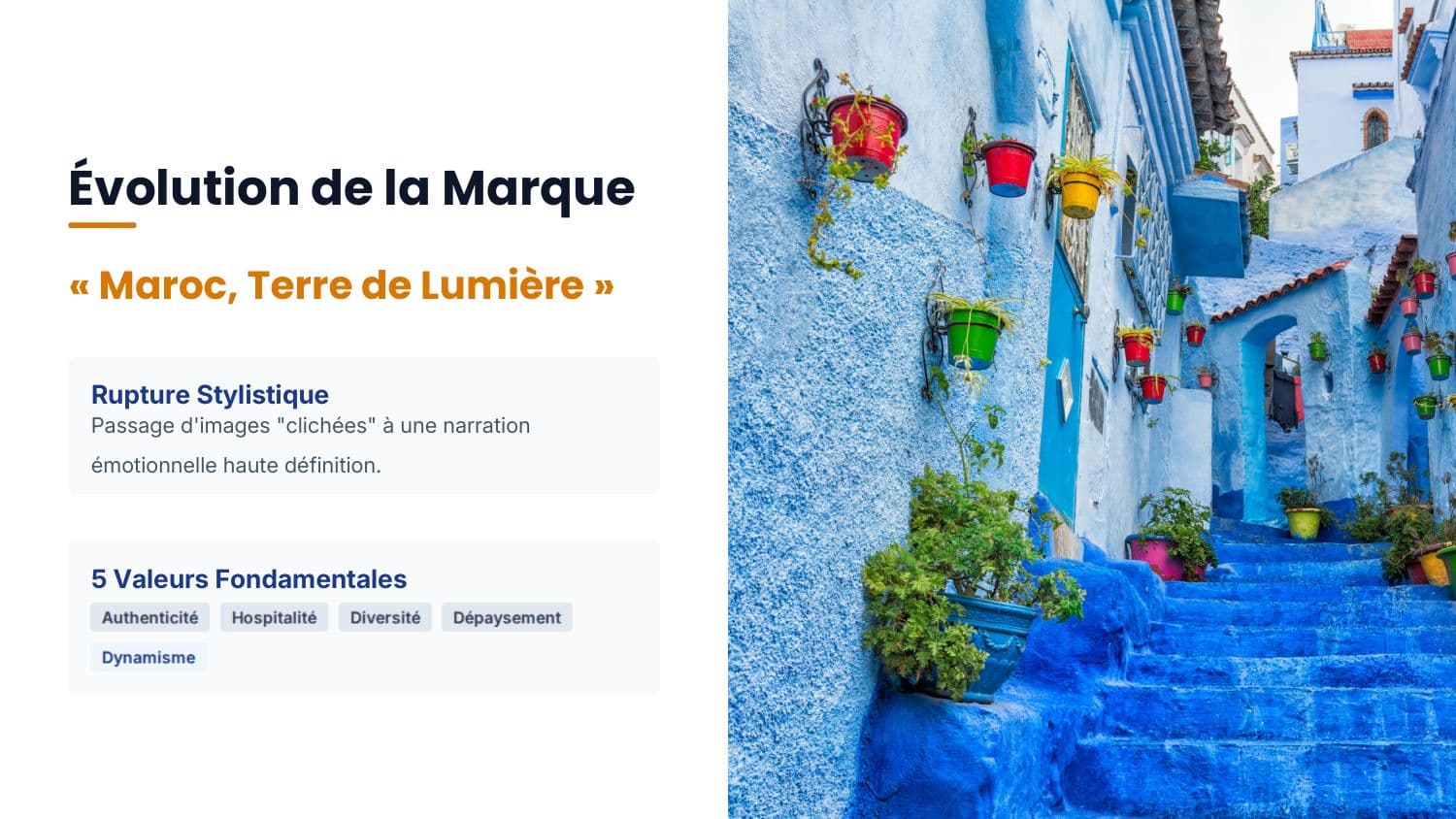
The question is direct: how does Morocco build and promote its brand image to differentiate itself on the international tourism market? The study examines the evolution of the "Morocco, Land of Light" brand, its stylistic break, and the move from clichéd imagery to emotional storytelling.
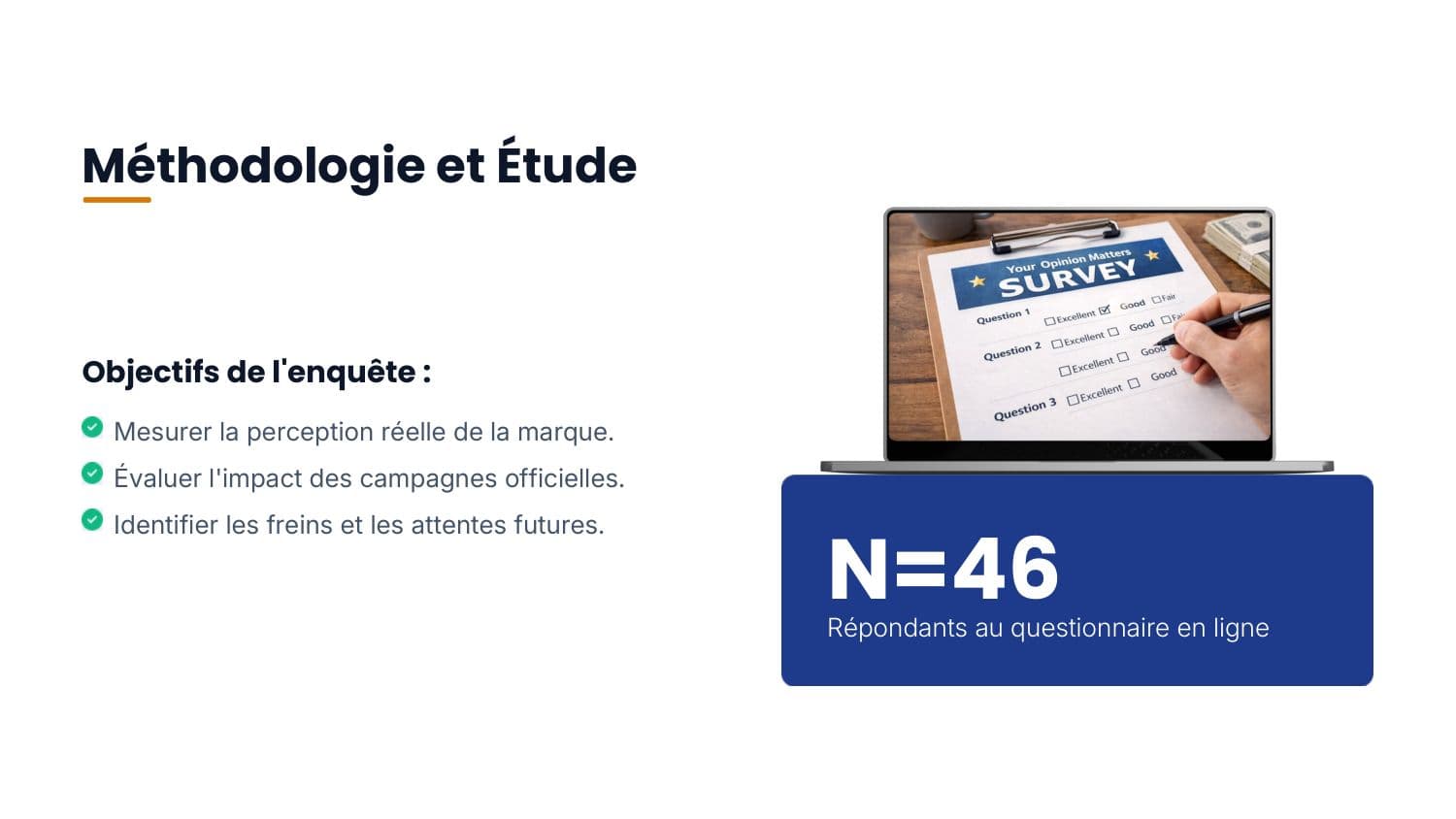
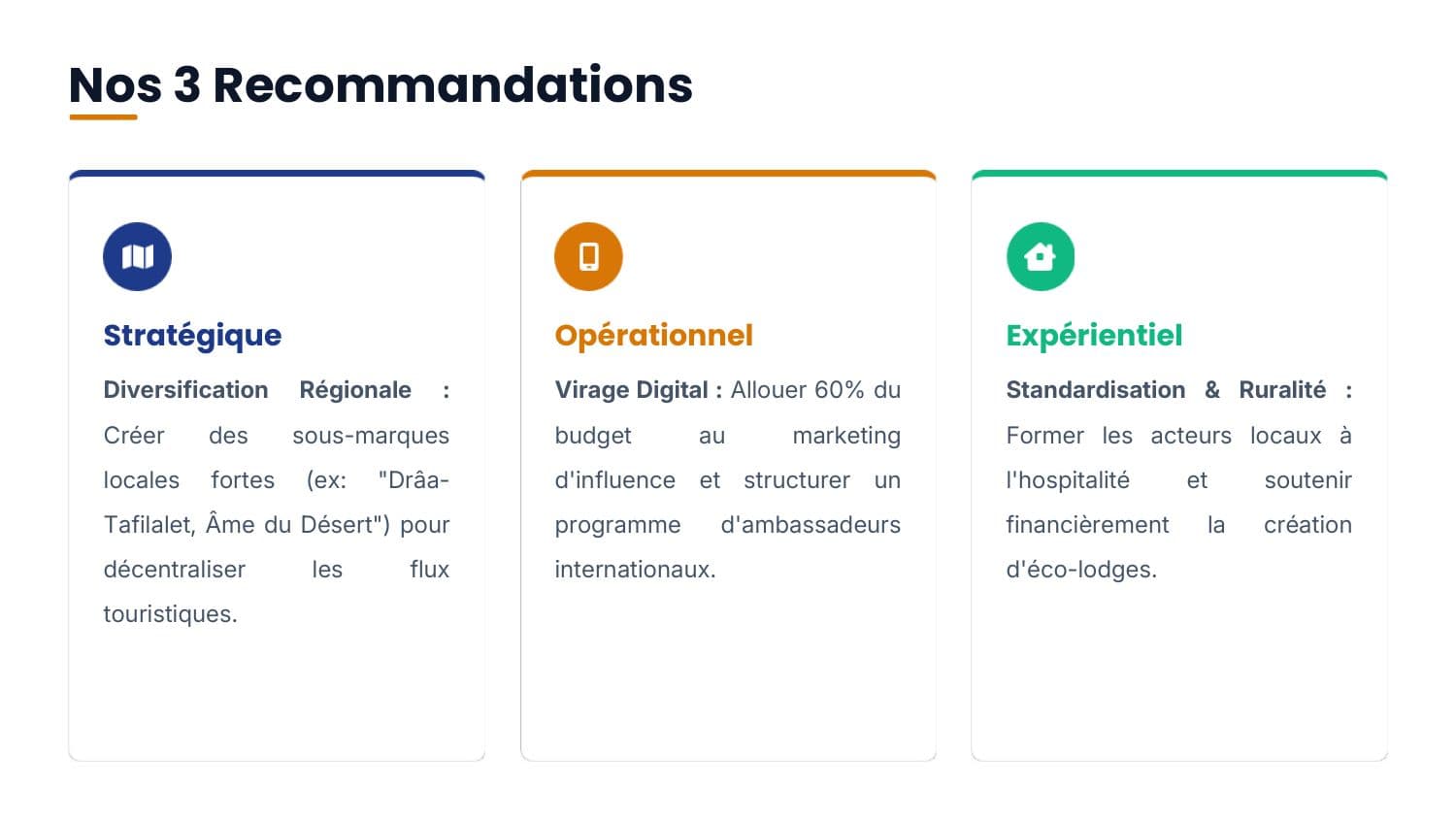
An online survey of 46 respondents measures actual brand perception, assesses the impact of official campaigns, and identifies obstacles and expectations, leading to three recommendations: strategic, operational, and experiential.
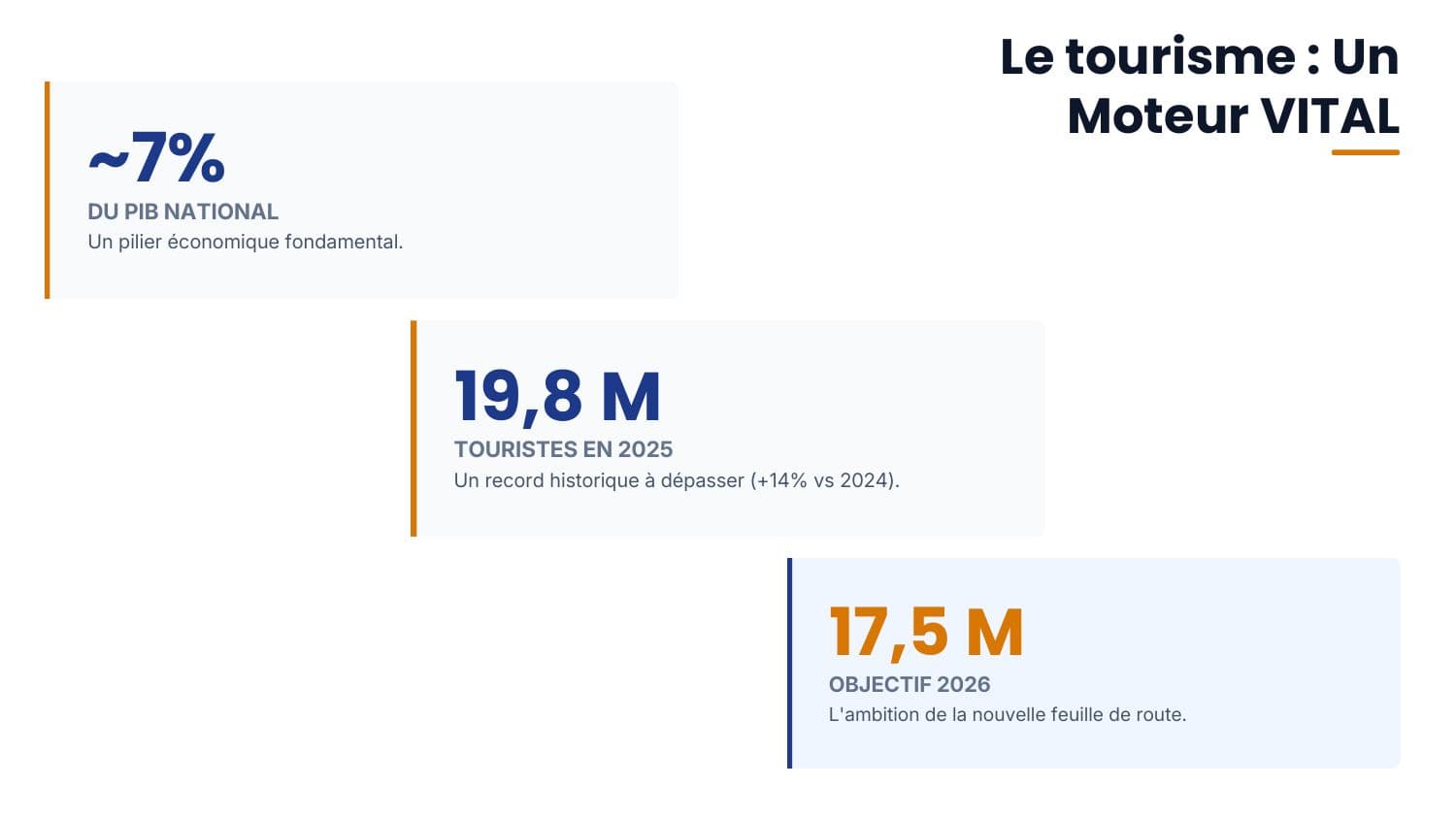
~7%
of national GDP
19.8 M
tourists in 2025, up 14% year on year
46
respondents to the perception survey
73.9%
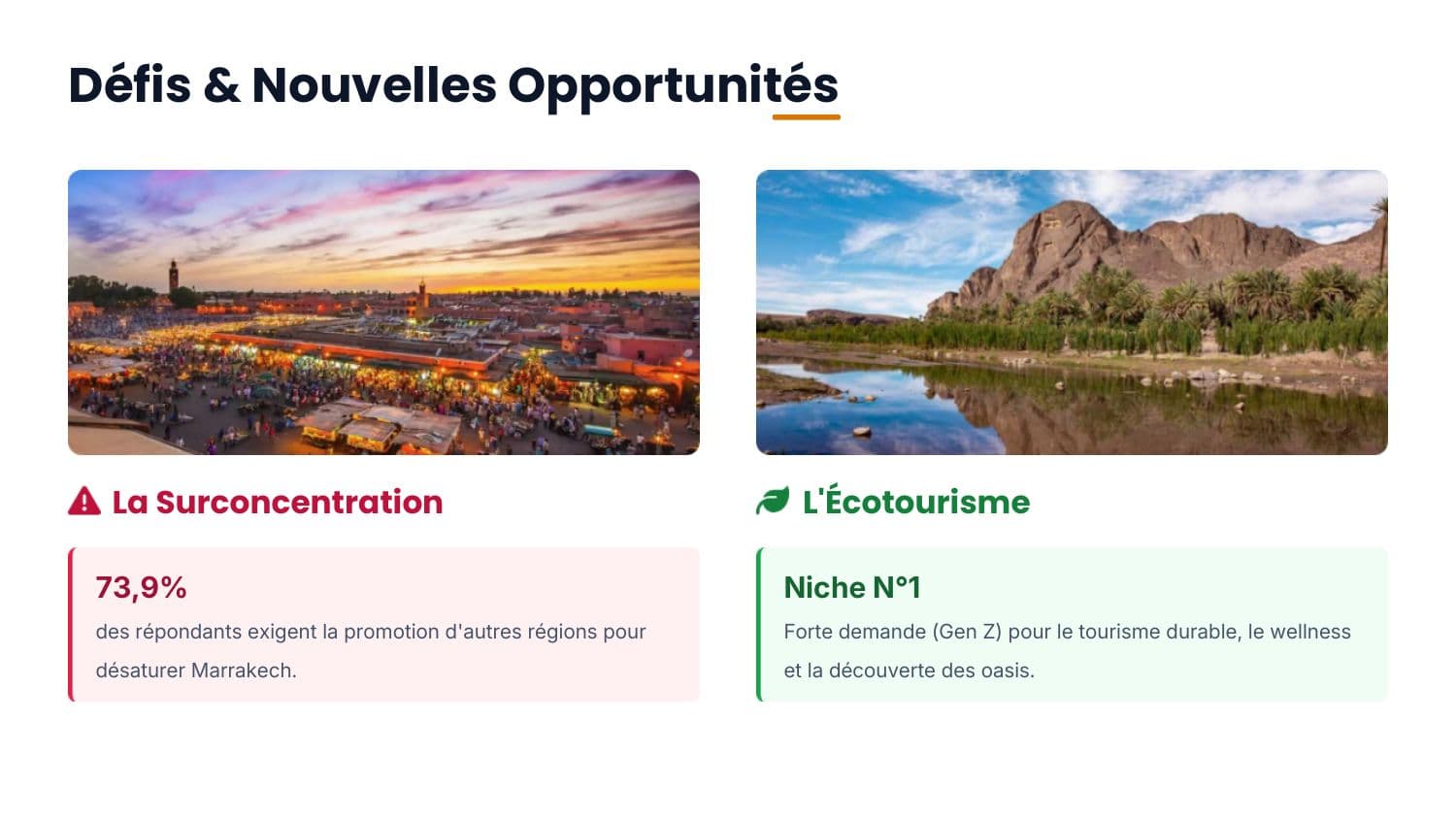
want other regions promoted
Infrastructure, landscapes, and tangible built heritage.
Cultural aura, media coverage, and stereotypes projected onto the destination.
The quality of what is lived, of the welcome, and of the service once on site.
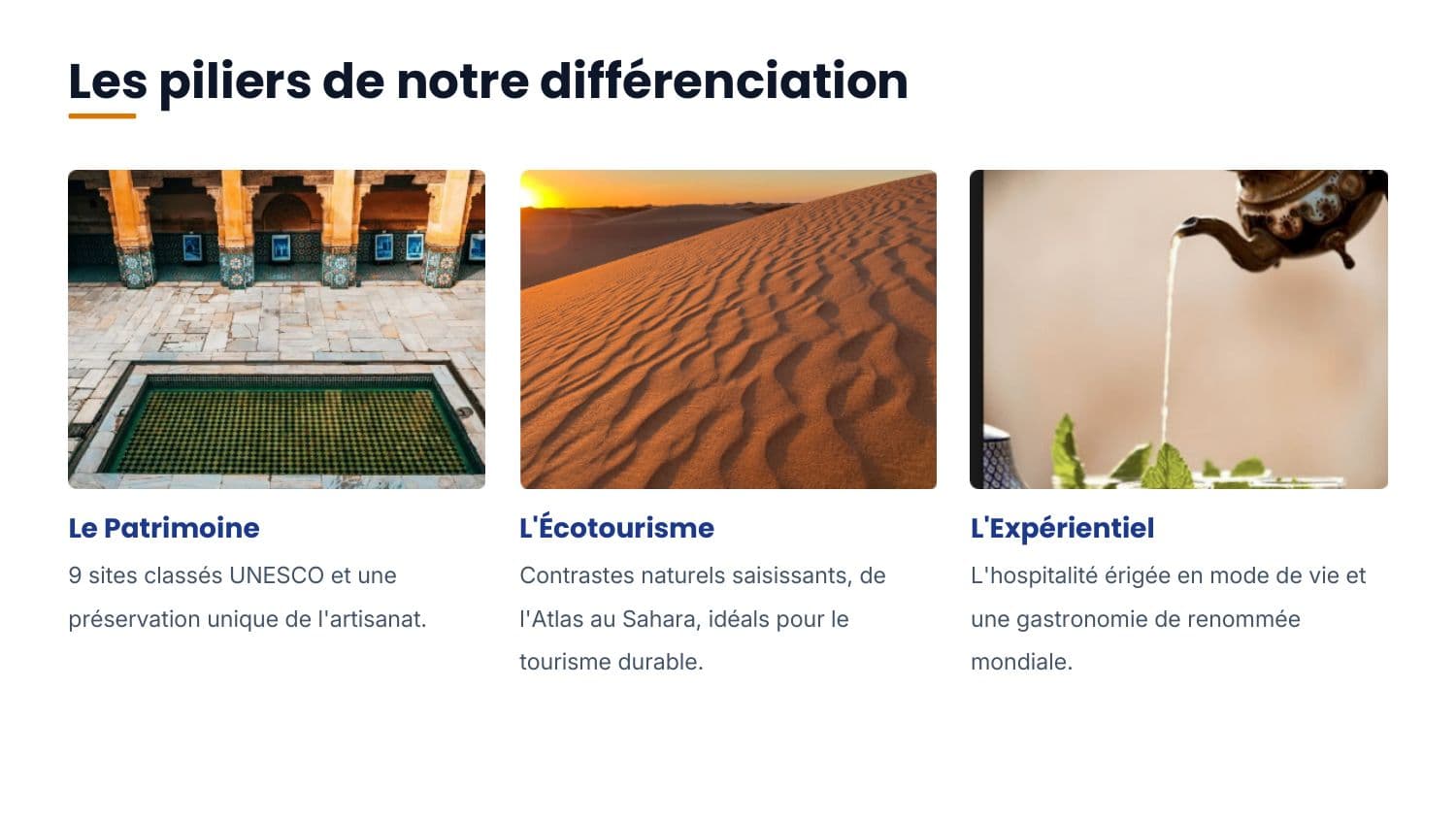
Nine UNESCO-listed sites and a uniquely preserved craft tradition.
Striking natural contrasts, from the Atlas to the Sahara, ideal for sustainable tourism.
Hospitality raised to a way of life, and a cuisine of global renown.
Create strong local sub-brands, for example "Draa-Tafilalet, Soul of the Desert", to decentralise tourist flows.
Allocate 60% of the budget to influence marketing and structure an international ambassador programme.
Train local actors in hospitality and financially support the creation of eco-lodges.
Authenticity and hospitality are the DNA of our tourism. The 2030 World Cup is the catalyst that will project our modernity to the world.
Walk through the deck, slide by slide.